Commercial floor cleaning and floor care
Commercial floor cleaning that keeps vinyl tile bright, concrete clean, and carpet out of the gray zone, with stripping, recoats, burnishing, and extraction done while your building is closed.
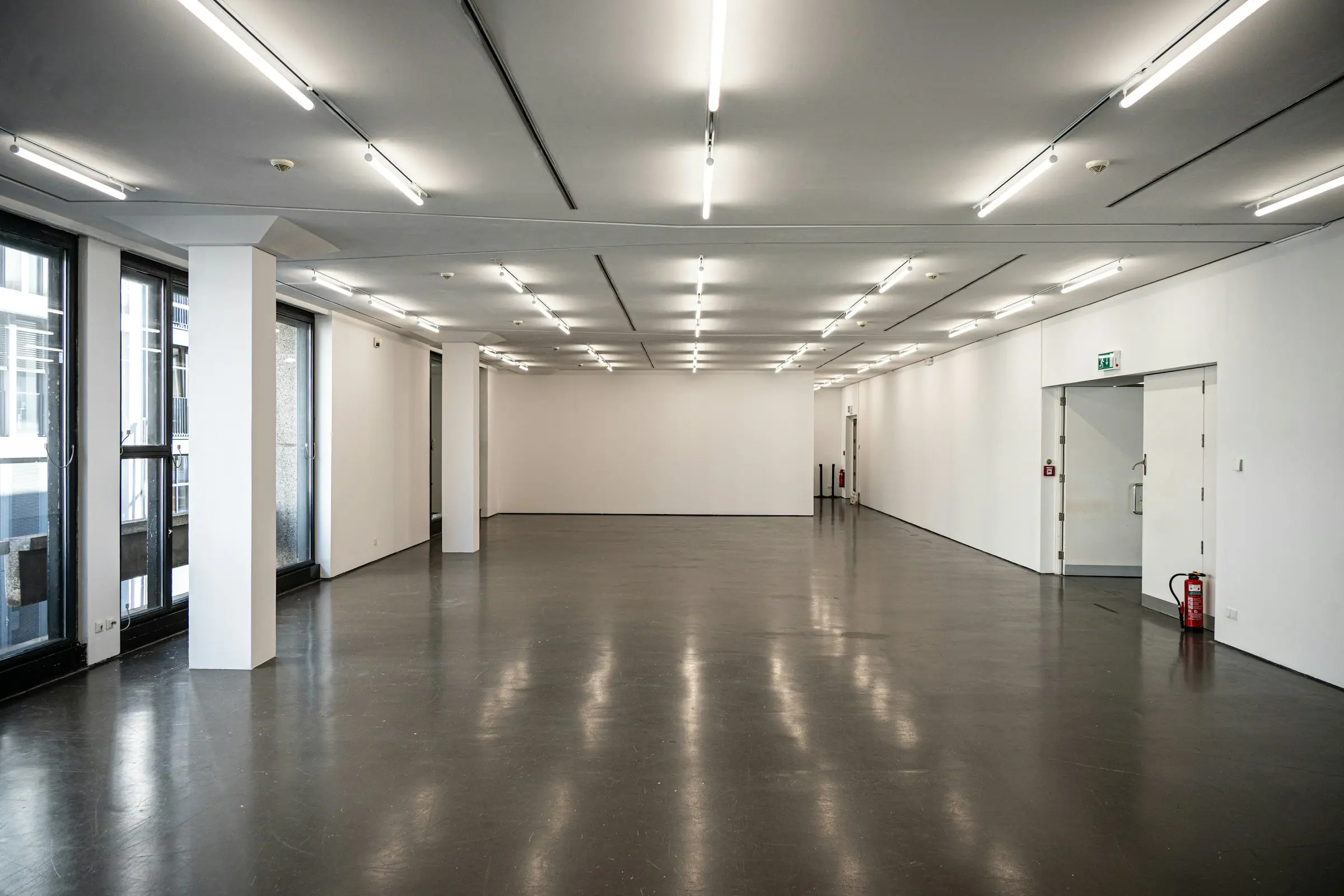
Grit from the parking lot grinds into floor finish every day. Traffic lanes go dull, and carpets hold soil a vacuum can't reach. A commercial floor cleaning company handles the periodic work your nightly crew can't, so the finish stays intact and the floor lasts longer.
National Cleaning Group provides floor stripping and waxing, scrub and recoat, burnishing, autoscrubbing, and carpet extraction for offices, clinics, schools, warehouses, stores, hotels, and public buildings. Floor work runs on its own or alongside your nightly cleaning, on nights and weekends when the area is closed.
What does a commercial floor cleaning company do?
It restores and protects floors on a planned cycle, using machines and chemicals a nightly janitorial crew doesn't carry.
- Stripping and refinishing. Old finish removed down to the tile, then fresh coats applied. Used on worn or yellowed vinyl floors.
- Scrub and recoat. The top layer of finish scrubbed off and new coats applied, at a lower cost than a full strip.
- Burnishing. High-speed buffing that brings back gloss and hardens the finish in traffic lanes.
- Autoscrubbing. Machine scrubbing for large hard-floor areas such as corridors, warehouses, and retail floors.
- Carpet extraction. Hot-water extraction that pulls out ground-in soil, stains, and residue.
- Spot and traffic-lane cleaning. Targeted carpet cleaning between full extractions.
| Service | What it does | When you need it | Area closed for |
|---|---|---|---|
| Strip and refinish | Removes all finish, lays new coats | Finish worn to bare tile, yellowed, or built up | One night to a weekend, plus cure time |
| Scrub and recoat | Removes the top layers, adds fresh coats | Traffic lanes dull but finish still intact | One night |
| Burnish | Polishes the finish at high speed | Gloss fading between recoats | An hour or two |
| Autoscrub | Machine scrubs and picks up water in one pass | Large hard floors that mopping can't keep clean | Only while the machine passes |
| Carpet extraction | Flushes soil out of the pile with hot water | Traffic lanes stay gray after vacuuming | Until the carpet dries, usually overnight |
Which floor types do you clean?
We maintain the hard floors and carpet found in most commercial buildings, with the method matched to the surface.
| Floor type | Where you find it | Routine care | Periodic care |
|---|---|---|---|
| Vinyl composition tile (VCT) | Corridors, clinics, schools, break rooms | Dust mop, damp mop, burnish | Scrub and recoat, full strip and refinish |
| Sealed concrete | Warehouses, docks, back-of-house | Sweep, autoscrub | Deep machine scrub |
| Ceramic tile | Restrooms, entries, kitchens | Mop with a neutral cleaner | Machine scrub |
| Carpet | Offices, corridors, lobbies, hotels | Nightly vacuuming, spot cleaning | Interim low-moisture cleaning, hot-water extraction |
If your building has other surfaces, tell us at the walkthrough and we'll set the right care for each one.
How does commercial carpet cleaning work?
Commercial carpet cleaning combines nightly vacuuming, quick spot treatment, and periodic deep cleaning on a schedule set by traffic.
Dry grit is what wears carpet out. It cuts fibers with every step, so thorough nightly vacuuming does more for carpet life than any single deep clean. Between deep cleans, spots are treated the day they show up, before they set, by the night crew or a day porter during business hours.
There are two main deep-cleaning methods:
- Hot-water extraction. A cleaning solution goes into the pile and is pulled back out with powerful suction, taking embedded soil and residue with it. It is the most thorough clean and the method most carpet manufacturers recommend. The carpet needs several hours to dry, so it runs on nights or weekends.
- Encapsulation (low-moisture cleaning). A cleaning solution is worked into the pile with a pad or brush, then dries into crystals that lift out with the next vacuuming. It removes surface soil and dries fast, so a room can reopen the next morning. It works as an interim clean between extractions, not a replacement for them.
Office carpet cleaning services work best when extraction dates follow traffic, not one annual date:
| Carpet zone | Traffic | Spot cleaning | Hot-water extraction |
|---|---|---|---|
| Entries, lobbies, elevator landings | Heavy | Daily or as needed | Every 3 to 6 months |
| Main corridors and break areas | Medium to heavy | Weekly or as needed | About twice a year |
| Open offices and cubicle areas | Medium | As needed | About once a year |
| Private offices, conference rooms | Light | As needed | Every 12 to 18 months |
For the full zone-by-zone plan, read our guide to cleaning commercial carpet.
Why isn't nightly mopping enough?
Nightly mopping removes loose dirt, but it can't replace finish that has worn away. Without periodic floor care, traffic lanes go dull, then bare, and bare tile stains faster and is harder to clean.
Five signs your floors need more than mopping:
- Traffic lanes stay dull right after they are cleaned.
- Finish has worn through to bare tile in doorways and corridors.
- Black marks and scuffs won't mop out.
- Floors near entries and along walls look yellow or dark from built-up finish.
- Carpet traffic lanes stay gray after vacuuming.
We pair nightly care from your janitorial services crew with scheduled burnishing, recoats, and strips through the year. Entrance matting and daily dust mopping are what make each recoat last.
How do you strip and refinish a commercial floor?
A full strip and refinish removes every layer of old finish, then builds new protection in thin coats.
- Move furniture, mats, and trash cans out of the area.
- Dust mop to remove loose grit.
- Apply stripper and let it dwell long enough to soften the old finish.
- Machine scrub to break the finish loose.
- Pick up the slurry with a wet vacuum.
- Rinse and neutralize, then let the floor dry completely.
- Apply thin coats of floor finish, with drying time between coats.
- Let the final coat cure, then return furniture.
Thin coats with full drying time between them hold up far better than a few heavy coats rushed on in one night.
How often should commercial floors be stripped, recoated, and burnished?
The schedule depends on floor type, traffic, and the condition of the current finish, so we set it at the walkthrough. A typical program might include:
- Burnishing on a regular cycle in lobbies and corridors
- Scrub and recoat in high-traffic areas between full strips
- Full strip and refinish when the finish wears through, often every one to two years
- Carpet extraction on a set cycle, with spot cleaning in between
Warehouse and industrial floors
Industrial floor cleaning services keep large concrete areas clean with machines, not mops. Ride-on and walk-behind scrubbers clean aisles and open floors in one pass, sweeping controls dust, and sealed or coated concrete gets the care its coating calls for. Break rooms and attached offices are scoped as their own floor lines. See warehouse and industrial cleaning for the full program.
Scheduled around your operations
Floor projects need the area empty while finish is applied and cures, so we schedule them for nights, weekends, or planned closures. Before each project we confirm:
- Which areas are closed and for how long
- What furniture and equipment moves, and who moves it
- When the floor is ready for foot traffic
- Any access or elevator requirements
Floor care by building type
- Offices. Lobbies, corridors, break rooms, and carpeted work areas. See office cleaning services.
- Medical offices and clinics. Hard floors in waiting rooms, corridors, and exam rooms. See medical office cleaning.
- Warehouses and plants. Autoscrubbing of aisles, break rooms, and attached offices.
- Schools. Summer and break-period strip-and-refinish projects, plus burnishing during the term. See school cleaning.
- Retail. Sales floors burnished and refinished around store hours. See retail store cleaning.
- Hotels. Carpeted corridors, ballrooms, and lobby hard floors. See hotel cleaning.
- Public buildings. Lobbies, corridors, and offices on a set calendar. See government facility cleaning.
Quality and accountability
Your account manager confirms dates, checks the finished work, and books the next visit. Supervisor inspections on your regular program catch wear early. Crews are trained on the machines and finishes they use. A certificate of insurance is available on request. Small repairs you spot during floor work, such as a loose threshold, can go on the same contract as light facility maintenance.
How much does commercial floor care cost?
Floor care is quoted as a project price per area and service: square footage, the condition of the floor, the number of finish coats, and how much furniture has to move. It is listed separately from nightly cleaning. For typical price drivers on strip and refinish work, see what floor stripping and waxing costs. For cleaning budgets in general, see our guide to commercial cleaning costs.
Schedule your floor assessment
Tell us your floor types, square footage, and when areas can be closed. We'll inspect your floors and send a written quote. We provide floor care across the U.S. Call (202) 968-1190 or email info@national-cleaning.com.
Get a Free Facility Assessment
Leave your details. We walk your building and send a written quote.
Frequently asked questions
How often should a commercial floor be stripped and waxed?
Most commercial vinyl tile needs a full strip and refinish every one to two years, and high-traffic entries and corridors can need it more often. Regular burnishing and a scrub and recoat every few months stretch the time between full strips, because they renew the top layers of finish before traffic wears through to bare tile. We set the cycle by area after seeing your floors.
How many hours does it take to strip and wax a floor?
It depends on square footage, how many layers of old finish come off, how much furniture moves, and how many coats go back down. Each coat needs time to dry before the next, and the last coat needs time to cure. A single room can be done in one night. Larger areas are split across several nights or a weekend, with walk-on times confirmed in advance.
Why don't we wax floors anymore?
Most commercial resilient floors are coated with acrylic polymer floor finish, not true wax. Modern finish is harder, holds a gloss under burnishing, and strips off cleanly with the right chemical. People still call the job "stripping and waxing" because the name stuck. When a quote says waxing, it almost always means stripping and laying new coats of floor finish.
Do you mop after stripping floors?
Yes. After the stripper dissolves the old finish and the floor is machine scrubbed, the slurry is picked up and the floor is rinsed with clean water, often with a neutralizer. Leftover stripper keeps new finish from bonding, which causes peeling and a cloudy look. The floor must be fully dry before the first coat of finish goes down.
How often do commercial carpets need to be deep cleaned?
Entries, lobbies, and elevator landings commonly need hot-water extraction every three to six months. Main corridors usually need it about twice a year, open offices about once a year, and low-use rooms every 12 to 18 months. Nightly vacuuming and prompt spot cleaning decide how long each cycle holds up.
Is carpet extraction part of regular janitorial service?
Nightly vacuuming is part of janitorial service. Hot-water extraction is a periodic deep clean, scheduled and priced as floor care. Spot cleaning between extractions can be handled by the night crew or a day porter during business hours, so stains are treated the day they happen.
Do you move furniture?
Chairs, trash cans, mats, and other small items are moved as part of the job. For desks, file cabinets, and equipment, we agree on a moving plan in advance, including who handles computers and personal items, so the night of the project runs without surprises.
Related services
Janitorial Services
Nightly or daily cleaning for commercial buildings: restrooms, trash, surfaces, and break rooms.
Office Cleaning
Recurring office programs scheduled around the tenant's hours and access rules.
Industries
Medical Offices
Medical office cleaning and healthcare cleaning services for clinics and dental offices: exam rooms, waiting rooms, and restrooms scheduled around your hours.
Warehouse and Manufacturing
Nationwide warehouse and distribution center cleaning: concrete floor care, loading docks, restrooms, and break rooms, scheduled around your shifts.