Medical office cleaning for clinics, dental offices, and outpatient suites
Medical office cleaning that has waiting rooms reset, exam rooms wiped down, and restrooms stocked before your first patient arrives, on a schedule built around your clinic hours and room list.
Cleaning a medical office means a full clean of waiting rooms, exam rooms, restrooms, and staff areas every day you see patients, worked clean to dirty, with EPA-registered disinfectants left wet for their full contact time on the surfaces patients touch. National Cleaning Group provides medical office cleaning for clinics, outpatient suites, dental and specialty practices, and multi-tenant medical office buildings.
Each program is built around your room list, your patient hours, and the rules your practice already follows.
What does medical office cleaning include?
It covers every room patients and staff use, except the clinical tasks your own team keeps.
- Waiting rooms and reception. Seating, side tables, check-in counters, door hardware, glass, and floors, cleaned on every visit.
- Exam and treatment rooms. Counters, sinks, exam-table surfaces, chairs, light switches, trash, and floors, following the do-not-touch list your staff sets.
- Restrooms. Fixtures cleaned and disinfected, dispensers restocked, floors mopped with a disinfectant.
- Staff areas. Break rooms, workrooms, nurse stations, and private offices.
- Common areas. Corridors, elevators, stairwells, and entrances in medical office buildings.
Crews work clean to dirty and use color-coded cloths and mop heads. Restroom tools never touch an exam room counter. For the room-by-room task list, see the medical office cleaning checklist.
How often should a medical office be cleaned?
Most clinics need a full clean every operating day, with periodic floor work and optional daytime coverage on top. Your scope sets the final schedule, but most practices land close to this:
| Area | Typical frequency |
|---|---|
| Waiting room and reception | Every operating day |
| Exam and treatment rooms | Every operating day |
| Restrooms | Every operating day, plus daytime checks in busy clinics |
| High-touch surfaces (handles, counters, armrests, switches) | Disinfected every operating day |
| Break rooms and private offices | Nightly or two to three times a week, per scope |
| Hard floors | Mopped every visit, scrub and recoat on a periodic cycle |
| Waiting-room carpet | Vacuumed every visit, extraction a few times a year |
| Daytime porter | Optional, for high-volume clinics |
The main clean happens after the last appointment, or early enough in the morning that the crew is out before doors open. Clinics with long hours or busy waiting rooms often add a day porter for restrooms, spills, and restocking between patients, quoted as its own line. If you are deciding between the two, compare a day porter or night crew.
What do medical offices use to clean and disinfect?
Medical offices use neutral cleaners to remove soil and EPA-registered disinfectants, left wet for the label contact time, on the surfaces people touch.
| Term | What it does | Where it is used in a clinic |
|---|---|---|
| Cleaning | Removes soil, dust, and residue | Every surface and floor, before anything else |
| Sanitizing | Reduces germs on a surface to a lower level | Break room counters and food-contact areas |
| Disinfecting | Kills the germs listed on the label, if the surface stays wet for the contact time | Door handles, check-in counters, armrests, exam-room surfaces, faucets, restroom fixtures |
Disinfectant can't work through a layer of dirt, so surfaces are cleaned first. If your practice specifies a product, tell us at the walkthrough so the scope reflects it. Electrostatic spraying is available on request as its own line. See disinfection services for how those programs are built.
How is medical office cleaning different from regular office cleaning?
Medical office cleaning adds tool separation, a wider disinfection scope, and written rules about what the crew may touch. The rest of the building is cleaned much like standard office cleaning.
| Standard office | Medical office | |
|---|---|---|
| Tools | Shared cloths and mops are common | Color-coded cloths and mop heads, restroom tools kept separate |
| Disinfection | Restrooms and break rooms | Restrooms plus every touchpoint in waiting and exam rooms |
| Do-not-touch list | Rare | Written list for equipment, supplies, and clinical surfaces |
| Privacy rules | Basic key and alarm rules | No photos, no handling of charts or screens, knock-and-enter |
| Waste | Trash and recycling | Trash and recycling only; regulated waste stays with your hauler |
| Schedule | After business hours | Around patient hours, with optional daytime porter |
Dental office cleaning
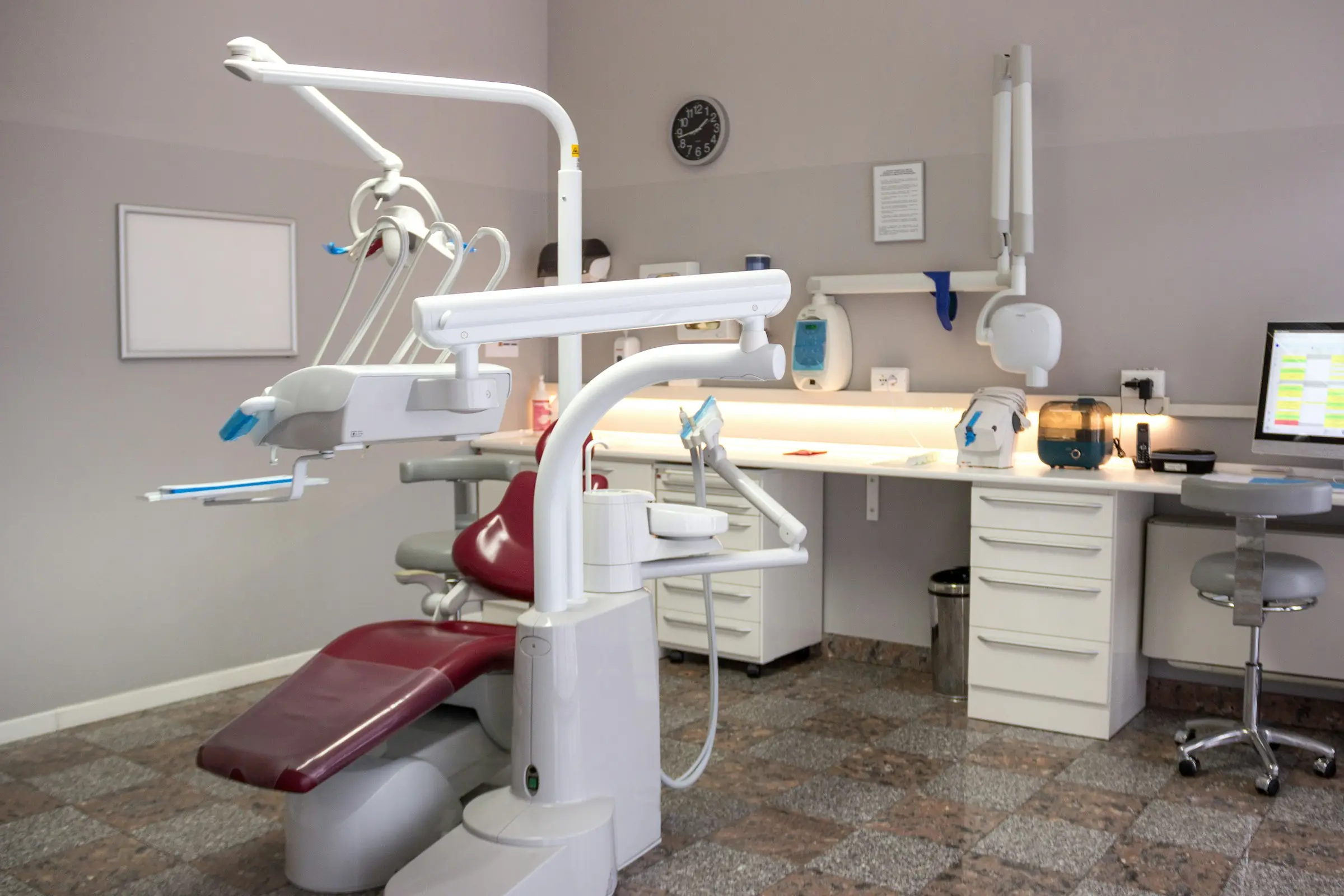
Dental office cleaning covers reception, restrooms, staff rooms, corridors, and operatory floors and counters, cleaned to your practice's no-touch list.
Dental practices have more equipment in each room than a typical exam suite, so the scope spells out exactly what the crew cleans in each operatory and what stays with your clinical staff. Crews never handle instruments, sterilizers, or the contents of the sterilization area. Floors in operatories take rolling stools and chair traffic all day, so they get the same periodic scrub and recoat as clinic corridors.
What stays with your clinical staff
Some tasks belong to your trained clinical team, and the written scope says so up front:
- Sharps containers and regulated medical waste, which go to your licensed hauler
- Instrument cleaning and sterilization
- Blood or body fluid spills, handled under your practice's own protocol
- Clinical equipment and anything on your do-not-touch list
Our crews handle ordinary trash and recycling and leave sharps containers and regulated waste where your staff manages them.
Floors take a beating in clinics
Rolling stools, wheelchairs, and steady foot traffic wear down vinyl and sheet flooring fast. Hard floors are mopped on every visit, with periodic scrubbing, recoating, or carpet extraction in waiting areas when the floor can be closed. Details are on floor care.
Your site rules, written into the scope
Every practice has rules about privacy and access. We agree on them before the first visit:
- Which rooms are cleaned nightly, which weekly, and which are off limits
- No photos in clinical areas and no handling of charts, screens, or paperwork
- Knock-and-enter rules for any room that may be occupied
- Items left on counters or exam tables stay put
- Keys, alarm codes, and who the crew calls if something is wrong
If your compliance office has added requirements, such as your infection-control rules, send them before the walkthrough.
One program for every clinic location
Practices and health groups with several locations get one cleaning program across all of them. Each site has its own room list and schedule, but the task list, the do-not-touch rules, and the inspection routine are the same everywhere, and one account manager runs the whole account. Each location gets its own quote, rolled into one contract. Light maintenance on the same contract covers small fixes your staff would otherwise chase. We serve clinics in the cities and states we serve across the U.S.
Medical office cleaning in Brewer
National Cleaning Group's nationwide service includes medical office cleaning in Brewer, Maine. Your cleaning schedule is built around your patient hours and room list, with waiting rooms, restrooms, and staff areas included. Start with a free facility assessment for a quote based on your building, visit frequency, and floor care needs.
How to choose a medical office cleaning company
Ask every bidder for the same five things:
- A certificate of insurance, and confirmation that the company is bonded.
- Background checks on every crew member who will enter your suite.
- Your do-not-touch and privacy rules written into the scope.
- The products they will use and the contact time each one needs.
- Who inspects the work, and how often.
We provide all five before you sign. For a fuller list, read how to vet a cleaning contractor. If you are unsure whether you need clinic cleaning or a hospital-style program, see medical office janitorial vs hospital EVS.
How much does it cost to clean a medical office?
Medical office cleaning is quoted as a project price for your scope after a walkthrough. The main drivers:
- Number of exam rooms, operatories, and restrooms
- Total square footage and floor types
- Nights per week
- Daytime porter hours
- Periodic floor work, such as scrub and recoat or carpet extraction
For the broader picture, see what drives commercial cleaning cost.
Consistency you can check
Clinics need the same result every night. Supervisors inspect the work on a regular schedule, and your office manager has a dedicated account manager for schedule changes and added work. Crews are background-checked and trained. When the practice adds exam rooms or extends hours, the quote is updated.
How to start
Book a free facility assessment. We walk the suite with you, count exam rooms and restrooms, note floor types and patient hours, and ask what is and is not working with your current cleaning. A written quote follows. For a practice inside a larger office building, janitorial services explains how nightly programs are set up.
Call (202) 968-1190 or email info@national-cleaning.com to book your walkthrough.
Get a Free Facility Assessment
Leave your details. We walk your building and send a written quote.
Frequently asked questions
How often should a medical office be cleaned?
Most medical offices need a full clean every day they see patients. Waiting rooms, exam rooms, restrooms, and high-touch surfaces are cleaned and disinfected each operating day, usually after the last appointment. Offices and break rooms follow the same nightly schedule or a lighter one. Hard floors and waiting-room carpet get periodic deep cleaning, and busy clinics add a daytime porter.
How much does it cost to clean a doctor's office?
The price depends on the number of exam rooms and restrooms, total square footage, floor types, how many nights per week, daytime porter hours, and periodic floor work. We quote a project price for your scope after a free walkthrough, with a labor-hour breakdown if you ask for one. Nothing is published as a flat rate because two clinics of the same size rarely need the same work.
What do doctors' offices use to clean?
Neutral cleaners remove soil from floors and surfaces. EPA-registered disinfectants go on the surfaces patients and staff touch, such as door handles, counters, armrests, and restroom fixtures, and stay wet for the full contact time on the label. Many practices specify their own disinfectant, and the crew uses that product instead.
How do you clean a medical office?
Crews work room by room from clean areas to dirty ones and top to bottom, with separate color-coded cloths and mop heads for restrooms and exam rooms. Trash comes out first, then surfaces, then disinfection of touchpoints, then floors. Our medical office cleaning checklist lists the room-by-room tasks most clinics include.
What is hospital cleaning called?
Hospital cleaning is usually called environmental services, or EVS. It covers patient rooms, operating rooms, and isolation areas under hospital infection-prevention teams. Medical office cleaning is a different job: clinics, outpatient suites, and dental offices cleaned after hours to your practice's rules. National Cleaning Group cleans medical offices and clinics.
How do you handle patient privacy?
Crews follow your rules: no photos in clinical areas, no handling of charts or screens, knock-and-enter for occupied rooms, and items on counters stay where they are. The crew is briefed on your rules before the first night, and your account manager keeps them in the written scope.
Related services
Disinfection Services
Touchpoint disinfection and electrostatic spraying for high-traffic surfaces.
Floor Care
Stripping, refinishing, burnishing, and carpet extraction on a set schedule.
Janitorial Services
Nightly or daily cleaning for commercial buildings: restrooms, trash, surfaces, and break rooms.