Commercial disinfection services
Disinfection services apply an EPA-registered disinfectant to surfaces that are already clean and leave it wet for the contact time on the label. We run touchpoint programs and added visits on the same contract and account manager as your nightly cleaning.
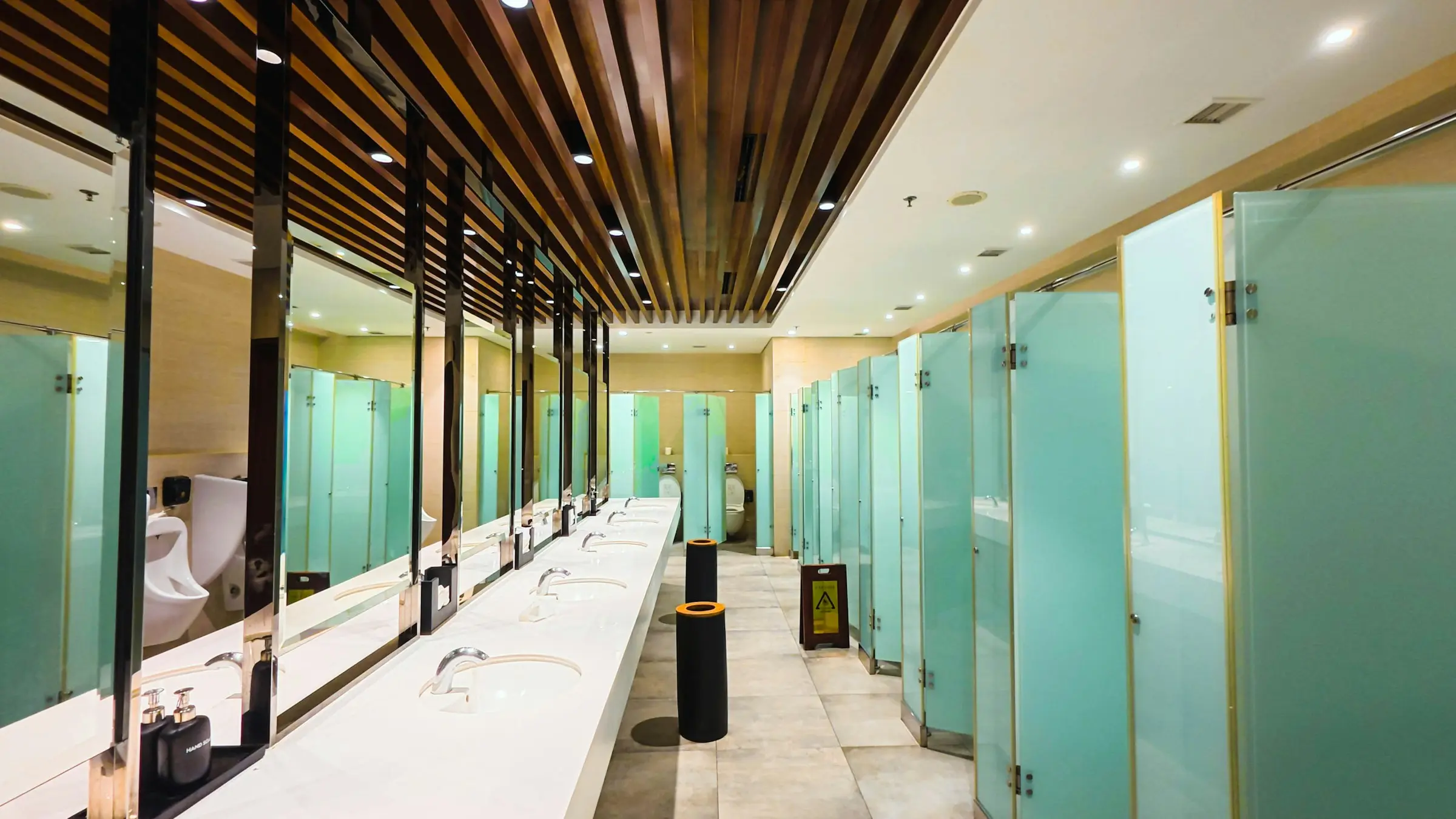
Dozens of people a day touch your door handles, elevator buttons, faucets, and shared keyboards. Our disinfection services treat those surfaces on a set schedule, as part of the same contract that covers your nightly cleaning.
National Cleaning Group is a commercial cleaning company providing touchpoint disinfection, added visits, and electrostatic spraying on request for offices, clinics, schools, gyms, retail stores, and public buildings. We use EPA-registered disinfectants, applied according to the label.
How does commercial disinfection work?
Commercial disinfection works by applying a registered disinfectant to a cleaned surface and keeping it wet for the label's contact time. Dirt, grease, and film shield germs from the disinfectant, so every program follows the same order:
- Clean. Remove soil and residue from the surface.
- Apply. Put disinfectant on the cleaned surface.
- Dwell. Leave the surface wet for the contact time printed on the label.
A spray-and-wipe that dries in seconds doesn't meet the label's contact time. Our crews are trained to leave the surface wet for the full time.
Cleaning vs sanitizing vs disinfecting
Cleaning removes soil, sanitizing reduces bacteria, and disinfecting kills the organisms named on the label. They are three different steps, and each has its place.
| Cleaning | Sanitizing | Disinfecting | |
|---|---|---|---|
| What it does | Removes dirt, grease, and film | Lowers bacteria to the level on the label | Kills the organisms listed on the label |
| Where it is used | Every surface, every visit | Food-contact surfaces, break room counters | Restrooms, door hardware, shared equipment |
| What it does not do | Kill germs reliably | Kill everything a disinfectant label covers | Work on a dirty surface or without contact time |
Disinfection program options
Most facilities choose a nightly touchpoint program and add an extra visit or electrostatic spraying when the building calls for it.
| Option | What it covers | When it runs | Best for |
|---|---|---|---|
| Touchpoint program | Door hardware, switches, restroom fixtures, break rooms, shared equipment | Every scheduled night, or more often with a day porter | Every occupied building |
| Electrostatic spraying (on request) | Whole rooms with many surfaces | Nights, weekends, or planned closures | Classrooms, gyms, waiting rooms, open offices |
| Added visit | Areas tied to an illness or event | Scheduled with your account manager | After an illness, before or after a large event |
Disinfection is listed as its own line in your quote, so you can see what each part costs.
Which surfaces should be disinfected, and how often?
The surfaces many people touch every day should be disinfected every scheduled visit. We build the touchpoint list with you, based on how your building is used. A typical list includes:
- Door handles, push plates, and crash bars
- Light switches and elevator buttons
- Handrails and stair rails
- Restroom fixtures, faucets, flush handles, and dispensers
- Break room counters, appliance handles, and tables
- Reception desks and check-in counters
- Shared phones, keyboards, and copier panels
- Waiting room chair arms and tables
Most offices run touchpoints nightly as part of their janitorial services. Lobbies, restrooms, and check-in counters with heavy daytime traffic can be done again during the day by a day porter. Keeping soap, paper towel, and sanitizer dispensers stocked is part of the same routine.
What are electrostatic disinfection services, and when are they worth it?
Electrostatic disinfection services use a sprayer that charges disinfectant droplets so they wrap around and cling to surfaces, including the sides and undersides of objects. We offer electrostatic spraying on request. It is not a default part of every program.
It is worth it when:
- A large room has many surfaces, such as classrooms, gyms, locker rooms, waiting areas, or open offices
- The area can be cleared while the product is applied and dries
- You want a whole room covered after an illness or before reopening
It is usually not worth it when:
- The room is occupied or can't be closed for the drying time
- The surfaces are few and easy to reach, where hand application covers them well
- The room is full of electronics or sensitive items that can't be covered or moved
Spraying never replaces cleaning, and it still has to meet the label's contact time. When you request it, we schedule it for nights, weekends, or planned closures and protect electronics before we start.
What happens after an illness in your building?
After an illness, call your account manager and we schedule an added disinfection visit focused on the areas the person used. Urgent requests get a fast response. On the visit, the crew:
- Cleans and disinfects the affected workstation, office, or classroom first.
- Treats the restrooms, break room, and shared equipment that person likely touched.
- Works outward through door hardware, elevator buttons, and common touchpoints.
The added visit is priced on its own, and your regular program keeps running. Rooms reopen once surfaces are dry and the label's re-entry directions are met. We tell you the expected time before we start.
Where disinfection matters most
- Medical offices and clinics. Waiting rooms, exam rooms, and patient restrooms. See medical office cleaning and our medical office cleaning checklist.
- Schools and universities. Classrooms, desks, gyms, and cafeterias. See education cleaning.
- Offices. Break rooms, conference rooms, and shared equipment. See office cleaning services.
- Gyms and fitness areas. Equipment, locker rooms, and showers.
- Public buildings and retail. Counters, entries, and restrooms with steady public traffic. See government facility cleaning and retail store cleaning.
- Hotels and event spaces. Lobbies, front desks, elevators, and public restrooms. See hotel and hospitality cleaning.
- Warehouse break rooms and locker rooms. Shared tables, microwaves, time clocks, and lockers. See warehouse cleaning.
Planning around your occupants
During the walkthrough we note when areas are empty, which rooms hold sensitive equipment, and which surfaces need a gentler product, such as coated wood, stone, or touchscreens. Spraying is scheduled when rooms are clear. Touchpoint work can run nightly or through the day.
Which disinfectants do you use?
We use EPA-registered disinfectants selected for your surfaces and setting, applied according to the label. Your proposal can name the product, so you can check its label yourself. If occupants have sensitivities, tell us during the walkthrough and we'll plan around them.
Quality and accountability
Supervisors inspect disinfection work along with the rest of your cleaning. Your account manager handles changes and added visits, so disinfection runs through the same contact as everything else. We are insured and bonded, and a certificate of insurance is available on request.
How much do disinfection services cost?
Disinfection is priced by the number of touchpoints, how often they are done, the size of any sprayed area, and whether the work runs with your nightly program or as a separate visit. For more on pricing, read our guide to commercial cleaning costs.
Set up your disinfection program
We provide disinfection services nationwide; see the areas we serve. Tell us your building type, the areas you're concerned about, and your schedule. We'll walk the site and send a written quote. Call (202) 968-1190 or email info@national-cleaning.com.
Get a Free Facility Assessment
Leave your details. We walk your building and send a written quote.
Frequently asked questions
What is the difference between sanitizing, cleaning, and disinfecting?
Cleaning removes dirt, grease, and film so a surface is visibly clean. Sanitizing lowers the number of bacteria on a surface to a level the product label specifies, and is common on food-contact surfaces. Disinfecting kills the organisms listed on the label when the surface stays wet for the full contact time. Disinfecting only works on a surface that has been cleaned first.
What is electrostatic disinfection?
Electrostatic disinfection uses a sprayer that puts an electrical charge on disinfectant droplets. The charged droplets are drawn to surfaces and wrap around them, reaching the sides and undersides of chairs, desks, and equipment. It is a faster way to coat many surfaces in a large room. The label's contact time still applies.
What are the three types of disinfection?
Low-level, intermediate-level, and high-level disinfection. Building programs use surface disinfection with EPA-registered products on floors, fixtures, and touchpoints. High-level disinfection and sterilization are for medical instruments and are handled by clinical staff, so they are outside a cleaning contract. Exam room surfaces in a clinic still get surface disinfection from our crew.
What cleaners actually disinfect?
Products with an EPA registration number and a disinfection claim on the label, used the way the label says. That means the right dilution, a precleaned surface, and the full contact time. A cleaner without a registration number, or a disinfectant wiped dry after a few seconds, does not disinfect.
What cleaner kills the most bacteria?
No single product wins everywhere. The right disinfectant is the one whose label lists the organisms you are concerned about, is safe for the surface, and is used for its full contact time. We choose products for your surfaces and setting and the proposal can name each one so you can read its label.
Does disinfection replace regular cleaning?
No. Dirt left on a surface keeps a disinfectant from working. Your nightly janitorial program removes soil first, and disinfection is added on top. We run both under one contract, with one account manager and supervisor inspections that cover both.
Can you schedule an extra disinfection visit?
Yes. If you need an added visit, such as after an illness in the office or before a big event, call your account manager. Urgent requests get a fast response. The visit is priced on its own, and your regular program continues on schedule without any change to your nights.
Related services
Janitorial Services
Nightly or daily cleaning for commercial buildings: restrooms, trash, surfaces, and break rooms.
Office Cleaning
Recurring office programs scheduled around the tenant's hours and access rules.
Industries
Medical Offices
Medical office cleaning and healthcare cleaning services for clinics and dental offices: exam rooms, waiting rooms, and restrooms scheduled around your hours.
Education
School and education cleaning services nationwide for K-12 schools, colleges, and universities. Schedule cleaning around your academic calendar.